Fuel, insurance, and maintenance get most of the attention when people budget for a car. Depreciation rarely does, even though it's usually the single largest cost of ownership by a wide margin. It's invisible in the sense that no bill arrives for it — it just shows up as the gap between what you paid and what the car is worth when you sell or trade it in. Understanding how that gap forms, and which vehicles resist it, changes which car makes financial sense to buy. Two buyers can spend the exact same amount on a five-year-old vehicle and end up with completely different outcomes at trade-in time, purely because one chose a model and configuration that the used market values more highly than the other — the mechanical car underneath being otherwise comparable.
Why This Matters More Than It Looks Like It Should
Run the numbers on almost any mainstream vehicle over a five-year ownership period and depreciation typically outweighs fuel, insurance, and routine maintenance combined — often by a wide margin, and sometimes by more than all three added together. That's true even for reasonably fuel-efficient cars, because depreciation is calculated on thousands of dollars of asset value while fuel and maintenance are calculated on comparatively small recurring costs. A buyer who shops purely on sticker price or monthly fuel economy, while ignoring which models hold value, can end up paying substantially more for ownership overall than a buyer who paid slightly more upfront for a model with a stronger resale reputation.
How the Depreciation Curve Actually Works
The steepest drop happens in the first year, and a meaningful chunk of that happens the moment a new car is titled and driven off the lot — not because the car is suddenly worth less mechanically, but because it instantly becomes a "used car" in the market's eyes, no longer eligible for new-car financing rates, warranties framed as fresh, or the psychological premium buyers pay for being first owner. After that initial drop, the curve continues downward but at a slower, steadier pace through years two to five, before flattening out considerably once a car is old enough that its value is driven more by condition and reliability reputation than by age alone.
What Actually Drives Resale Value
Depreciation isn't random — it tracks a handful of factors buyers can weigh before purchase, not just after:
- Reliability reputation — brands with a long track record of mechanical durability hold value because buyers trust a higher-mileage example of that model to keep running; a single bad generation can drag a brand's resale value down for years
- Segment demand — trucks and body-on-frame SUVs have consistently outperformed sedans and hatchbacks on resale in recent years, driven by sustained buyer demand that keeps used examples in short supply relative to interest
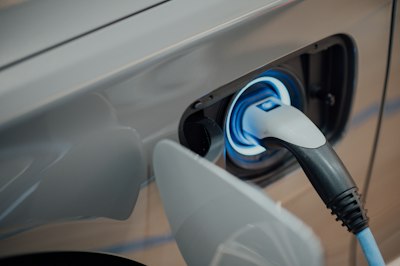
- Powertrain volatility — early-generation EVs have depreciated unusually fast in some cases, driven by rapid battery and range improvements in newer models, federal or regional incentive changes, and uncertainty around battery replacement cost; this is a genuinely different risk profile than a comparable gas vehicle
- Production volume and rarity — low-production trims, discontinued models, and certain enthusiast cars can buck the trend entirely and hold or even gain value, though this is the exception, not something to bet on for an ordinary daily driver
- Documented maintenance history — a full service record consistently commands a resale premium over an otherwise identical vehicle with gaps or no records, because it directly reduces the buyer's uncertainty about the car's condition
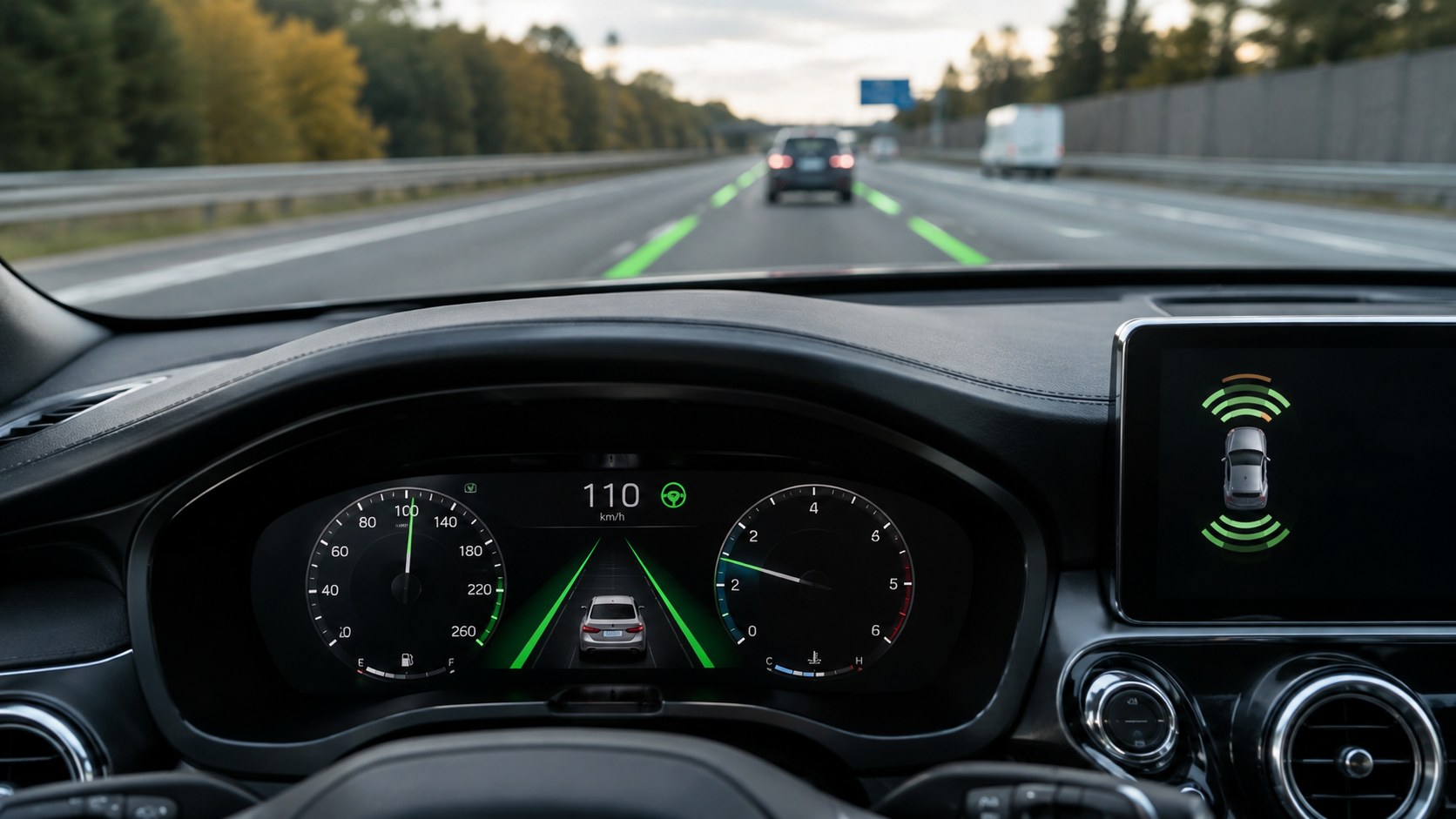
- Advanced safety and driver-assistance tech — a car equipped with a well-regarded driver-assistance system increasingly commands a small resale premium over an otherwise identical model without it, as more buyers treat those features as a baseline expectation rather than a luxury extra
Buying Near the Bottom of the Curve
The most direct way to use this information is to let someone else absorb the steepest part of the drop. A two- or three-year-old off-lease vehicle has already taken the bulk of its first-year hit while typically still carrying meaningful factory warranty coverage and a documented service history. That combination — most of the depreciation already absorbed, most of the warranty still intact — is why the two-to-three-year mark is consistently one of the best value points in a vehicle's ownership life.
First model-year vehicles for a redesigned generation are worth extra caution from a depreciation standpoint, independent of any reliability concerns: they tend to depreciate slightly faster than a well-established generation, since buyers of the next model year benefit from any early fixes and the earlier cars are perceived, fairly or not, as the least refined version of the new design.
Leasing, Buying, and Who Actually Absorbs the Depreciation
A lease payment is, structurally, a bet the leasing company makes on future depreciation — the monthly cost is built around the projected gap between the car's value today and its estimated residual value at lease end, plus interest and fees. When a leasing company sets an aggressively high residual value estimate (common on models with historically strong resale), lease payments on that model tend to look unusually attractive, because the company is effectively betting the car won't depreciate as fast as a typical vehicle. This is worth knowing even for buyers who have no intention of leasing: a model with strong, cheap lease offers relative to its purchase price is often signaling that the market expects it to hold value well, which is useful information when shopping used examples of the same model a few years later.
Buying outright shifts all of the depreciation risk onto the owner, which is exactly why the segment and reliability choices discussed above matter more for a purchase than a short-term lease. A buyer planning to keep a vehicle eight or ten years cares less about the depreciation curve's shape in years one through three, since they're not selling into it — but a buyer planning to trade in or sell within three to five years is making a decision that's arguably more about resale value than about the car itself.
Mileage, Condition, and Age Don't Depreciate a Car Equally
Two identical model-year vehicles can have meaningfully different resale values depending on how their mileage accumulated. A car with mileage clustered around the regional average for its age, driven consistently rather than sitting idle for long stretches, generally commands a stronger resale price than either a very low-mileage example (which can raise questions about why it was barely driven, and whether components suffered from inactivity) or a heavily above-average one. Cosmetic condition — paint, interior wear, and evidence of a smoke-free cabin — carries real weight in resale pricing beyond what a spec sheet captures, often more than buyers expect relative to mechanical condition, simply because it's the first thing a prospective buyer notices and it colors their assumption about how well the rest of the car has been cared for.
Regional and seasonal effects add another layer: convertibles and 4x4 trucks often command a premium in the region and season where they're most useful, and a slight discount elsewhere or out of season. Selling a convertible in early spring in a warm climate, versus late fall in a cold one, can shift the achievable price by a meaningful margin for reasons that have nothing to do with the car's actual condition.
Bottom Line
Depreciation is a cost you pay whether or not you ever look at it directly, and it's frequently larger than every other ownership cost combined over a typical ownership period. Reliability reputation, segment demand, and powertrain type are the biggest levers — and buying a car once it's already absorbed its steepest depreciation, with its warranty and service history intact, is usually the single highest-leverage financial decision in the entire purchase.